Launch offer — valid today only

📄 Digital book in PDF · read it on your phone or print it

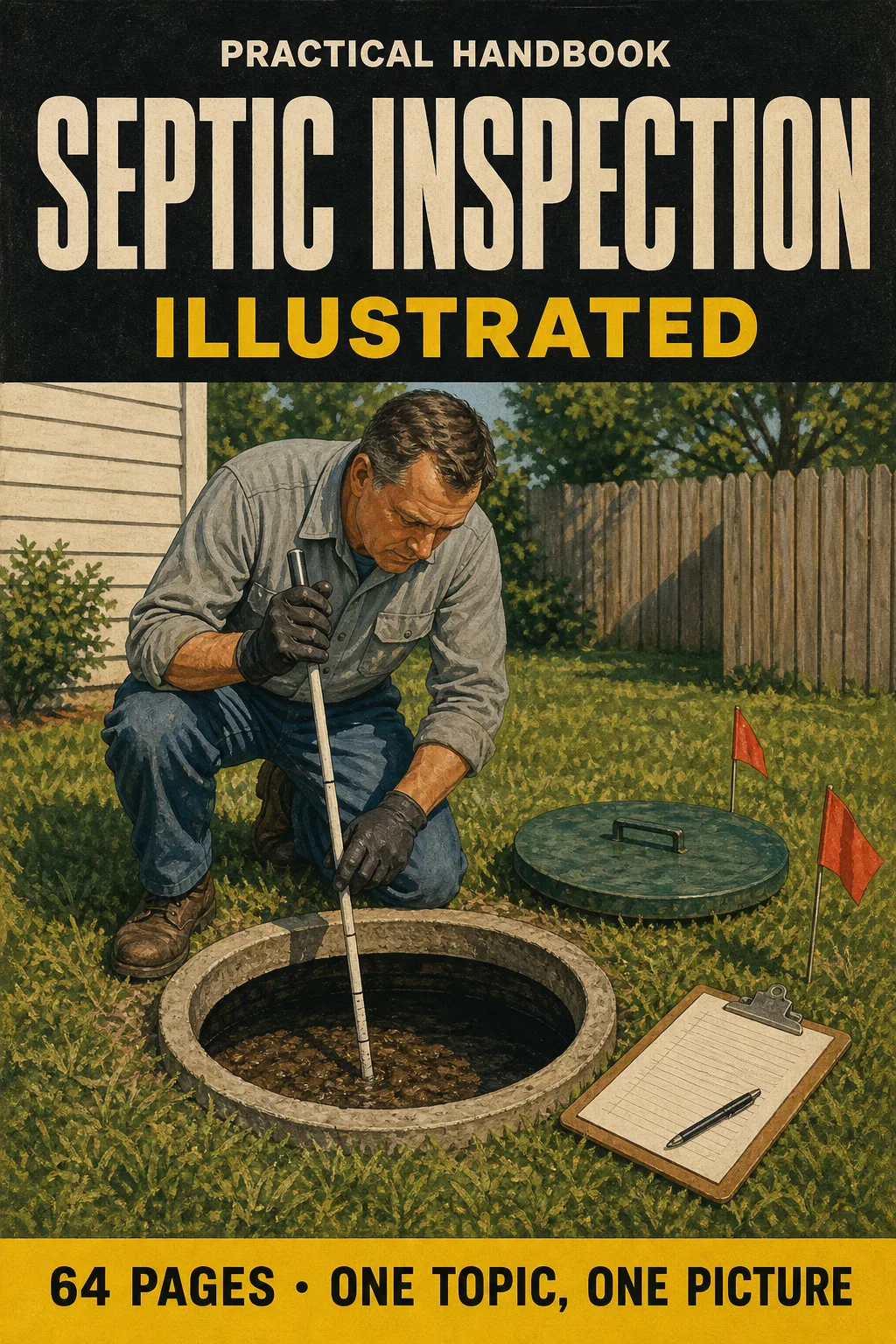
Septic Inspection, Drawn: From House Drain to Drainfield The Same Order Every Time

For home inspectors adding septic, pumping techs and NAWT exam candidates. One topic per page: the drawing first, then the numbers and steps to remember. 64 illustrated pages.

I WANT THE 64 ILLUSTRATED PAGES

🔒 Secure checkout · PDF by email · 30-day guarantee

Every topic, its own pageEach inspection step drawn, with the explanation right next to it
64 illustrated pages8 parts, from the whole system path to your state and county checklist
Up-to-date sourcesNAWT inspection standards, EPA Onsite Wastewater Manual and EPA SepticSmart
PDF by emailFormat

Look Inside the Book

Each page has a big drawing and a box with the numbers and steps you need to know:

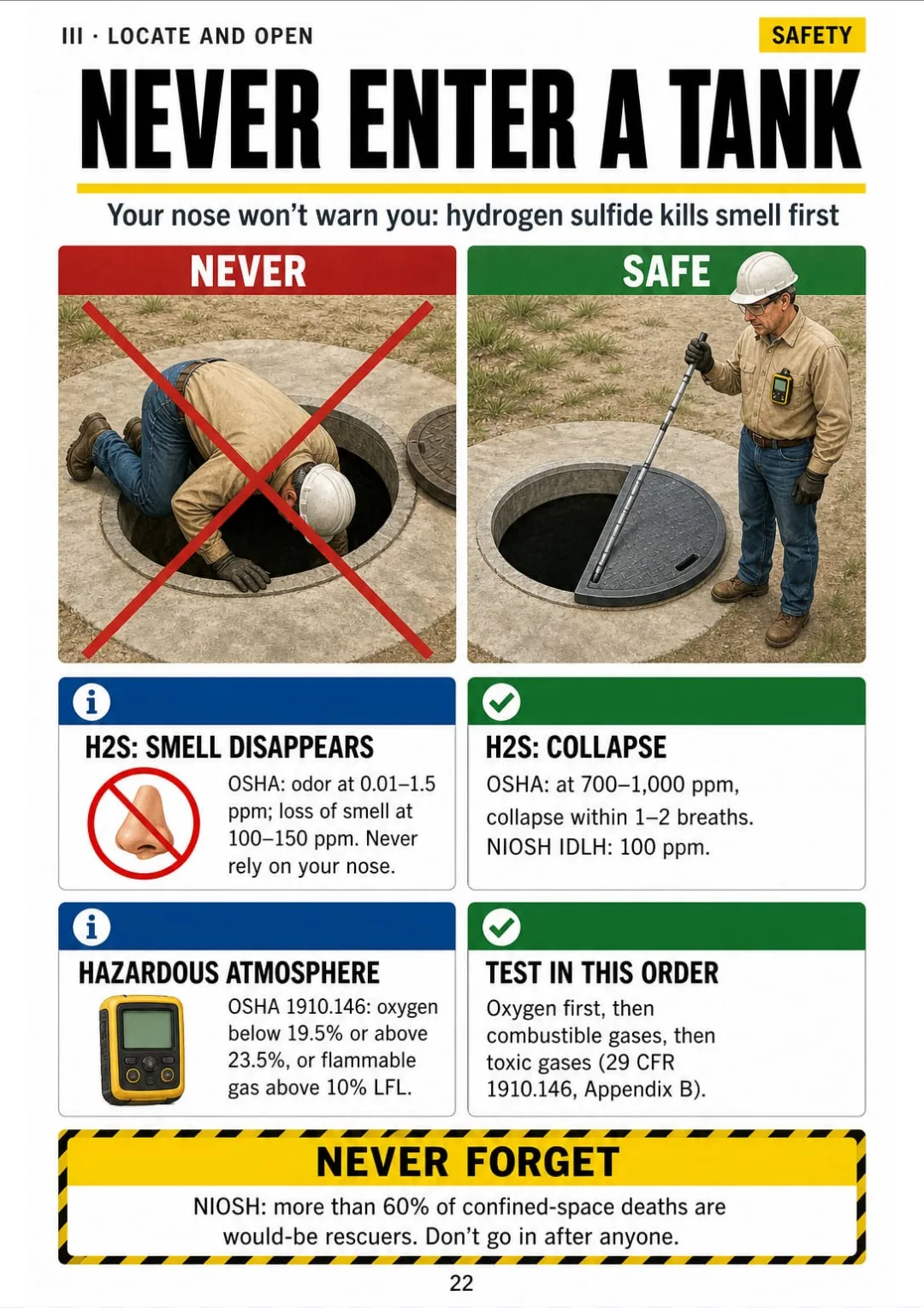
Confined space: H2S kills smell at 100–150 ppm; test oxygen, then flammables, then toxics.
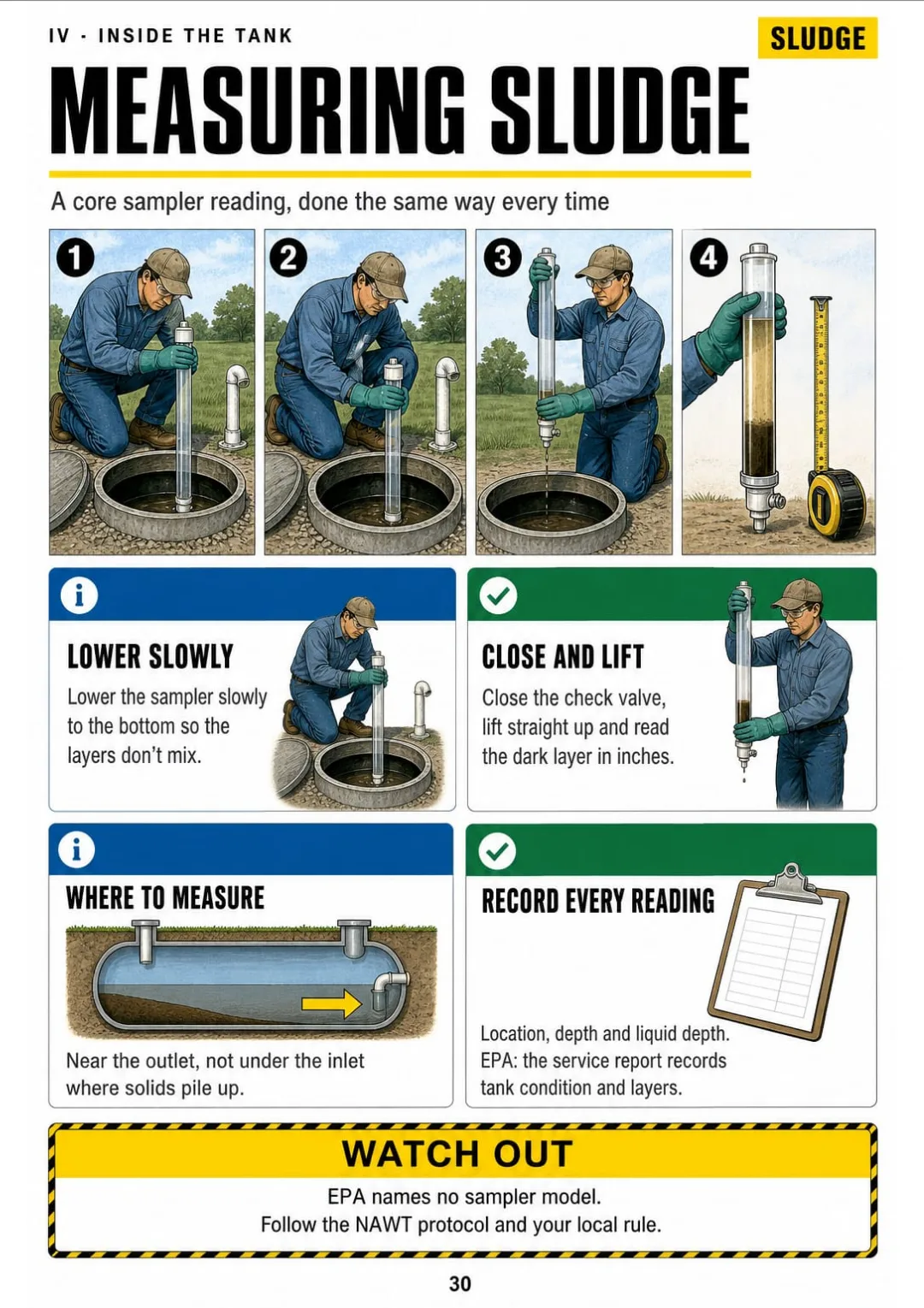
Lower slowly, close the valve, lift, read the dark layer in inches near the outlet.
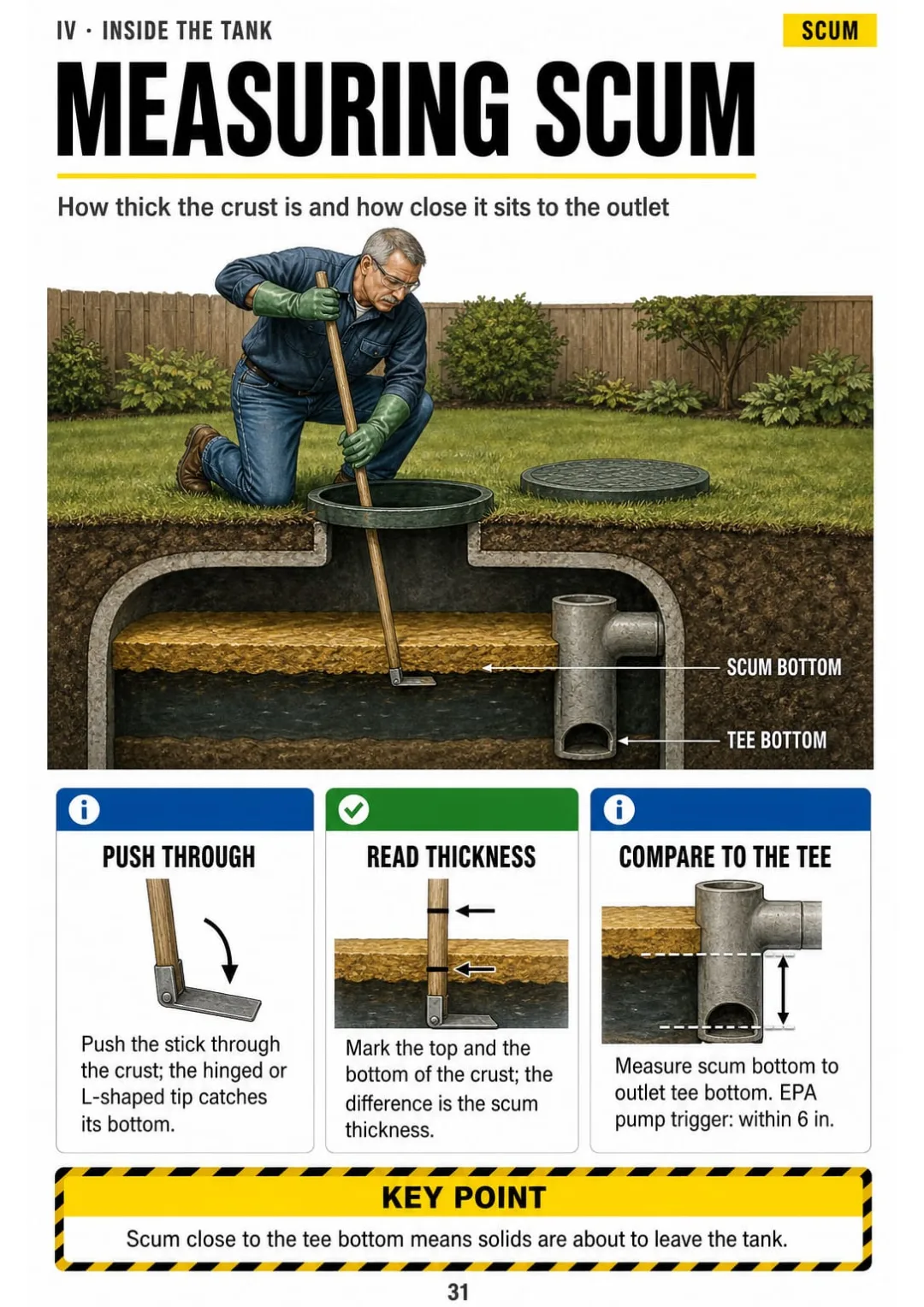
Measure scum bottom to outlet tee bottom: within 6 in is an EPA pump trigger.
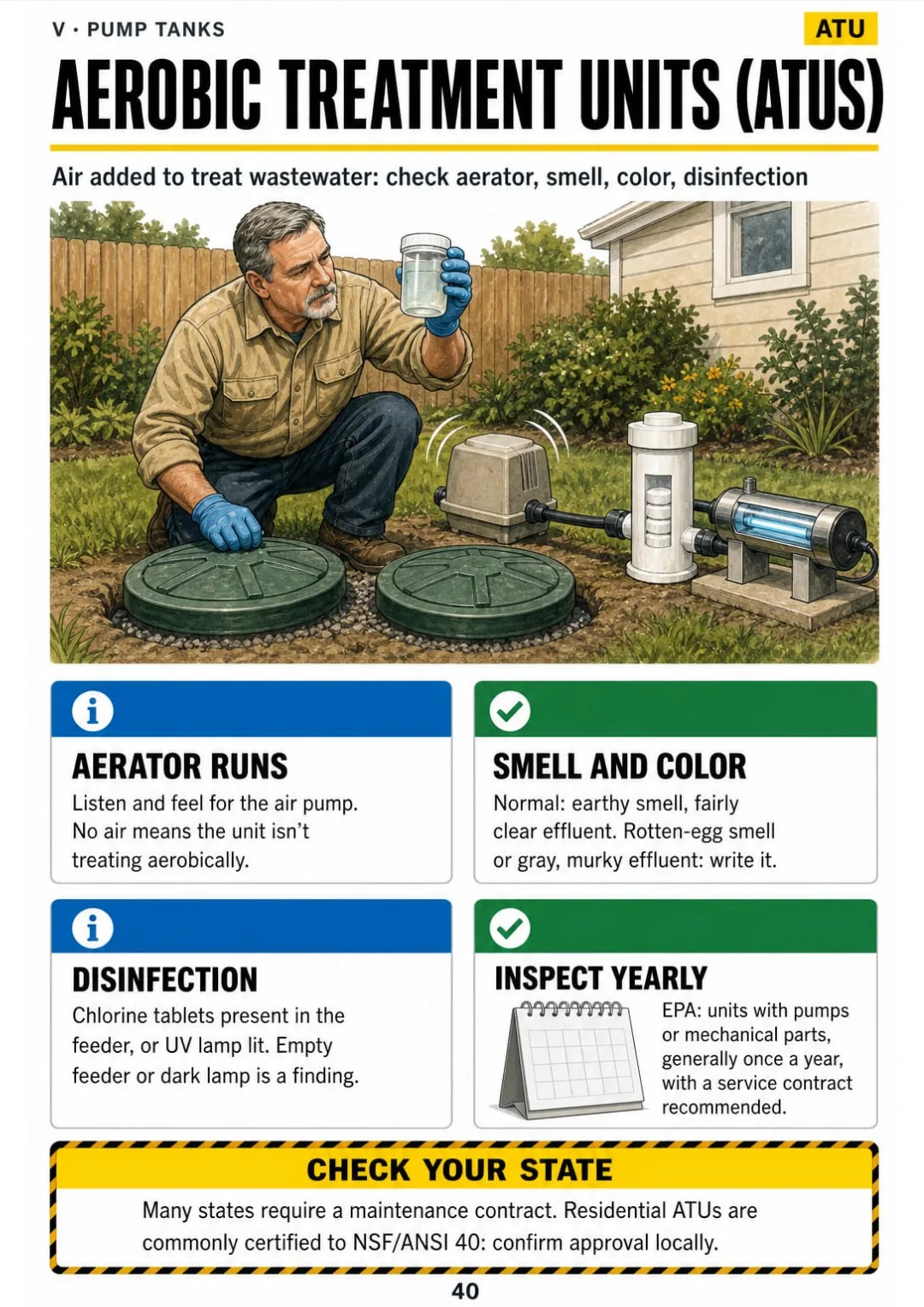
ATU check: aerator running, earthy smell, clear effluent, chlorine or UV working, yearly service.
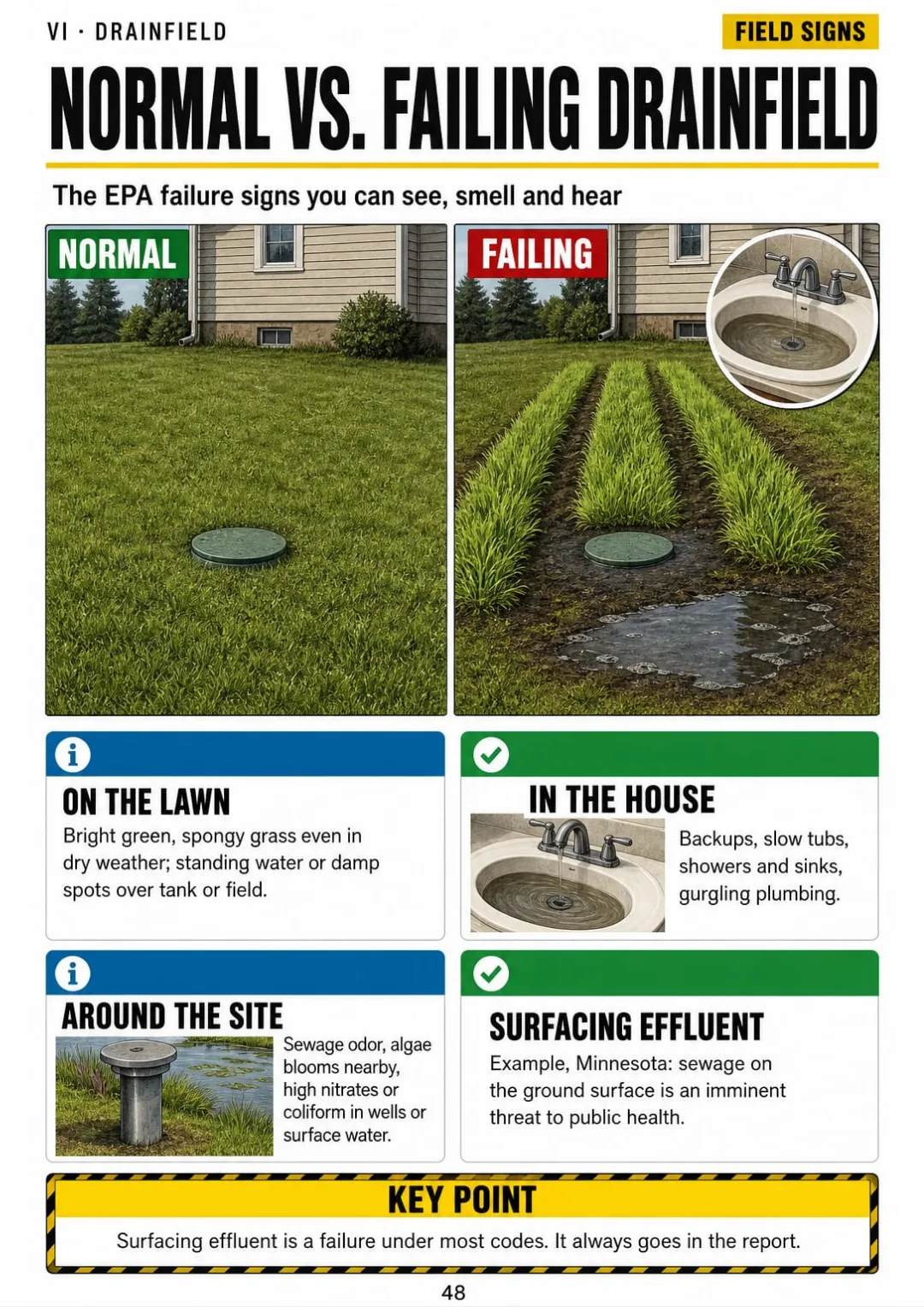
Side by side: a working drainfield and the EPA failure signs, from lawn to house.
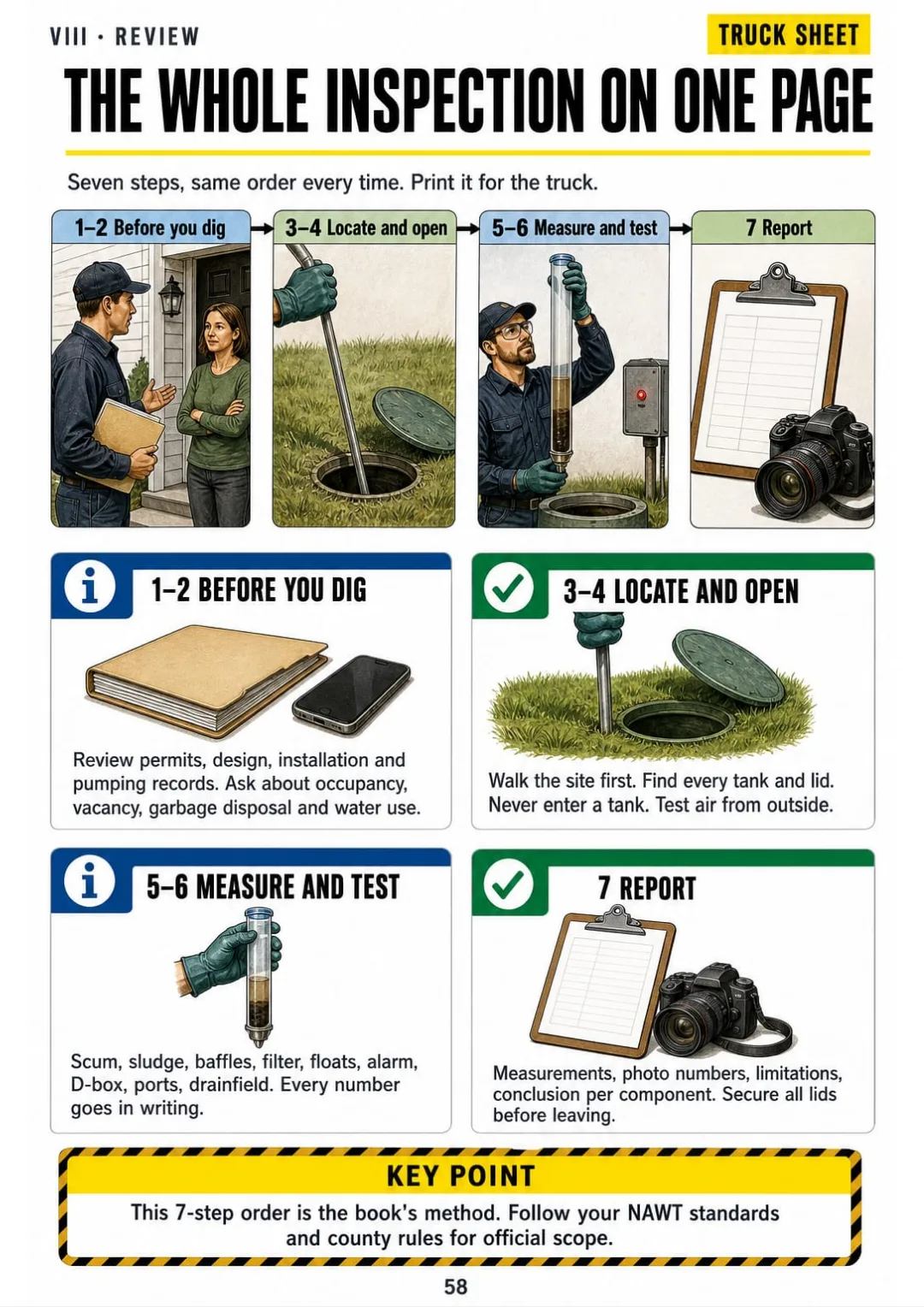
7 steps on one page: records, interview, locate, open, measure, test, report.
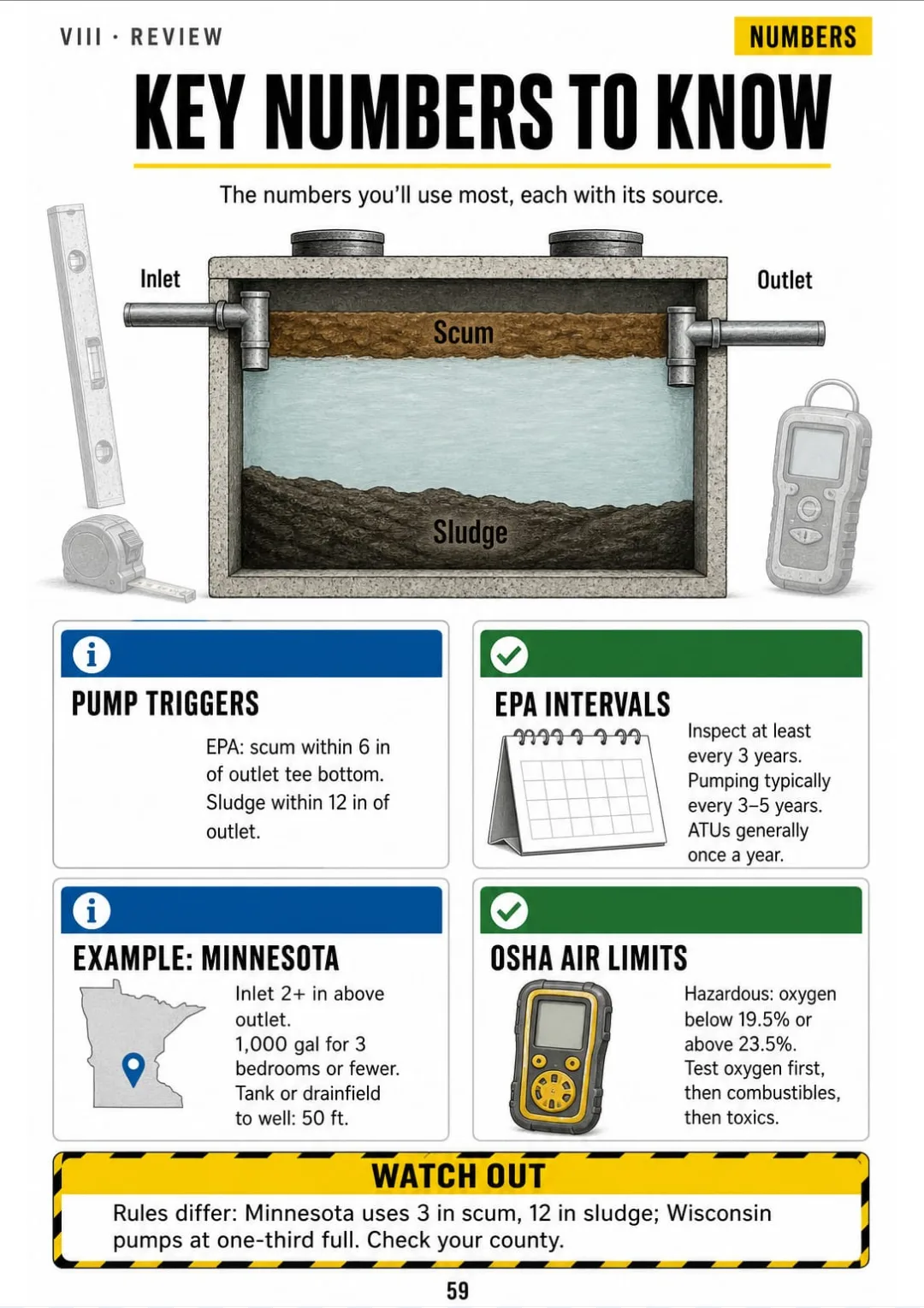
6 in scum, 12 in sludge, 25% of depth: EPA's pump triggers at a glance.
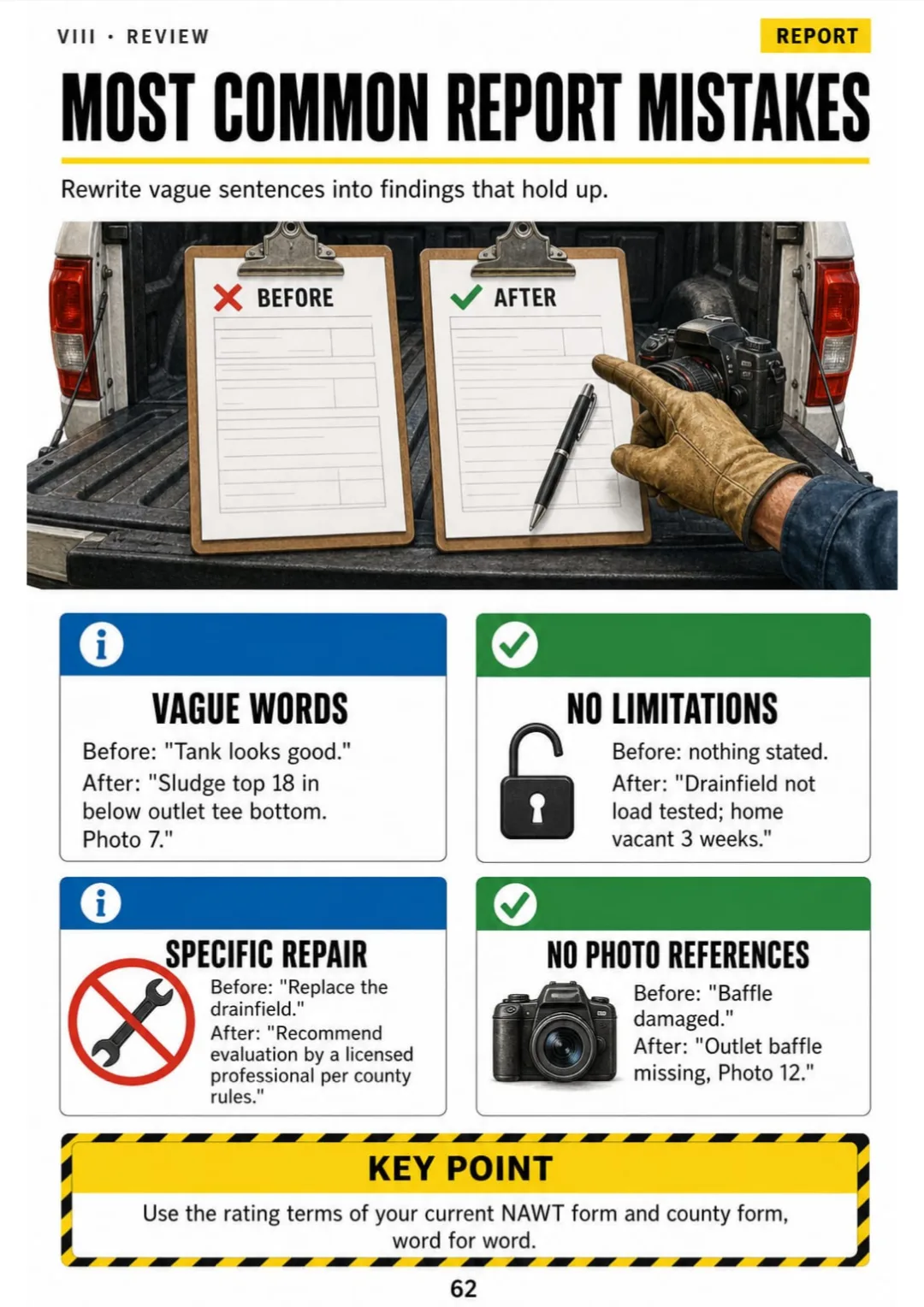
"Looks good" vs. "sludge 18 in below outlet, Photo 7": before and after.

Swipe to see more →

These are real pages from the book. The table of contents is the full one: 8 parts and 60 topics.

The Problem Isn't You. It's How It Was Explained to You.

You're standing over an open tank with the sampler in your hand, and the buyer's agent asks: "So, does it need pumping?" You have the reading. You're just not sure what it means.

The manual has the answer, but it's spread over three paragraphs about liquid depth, layer ratios and outlet clearance. Read at night after a full day on the job, it doesn't stick.

Measure scum bottom to outlet tee bottom: within 6 in is an EPA pump trigger.

In the book, that question is one page: the tank drawn in cross-section, scum within 6 inches of the outlet tee bottom, sludge within 12 inches, and the total-depth rule in a box, flagged to check against your county. You hold your reading up to the drawing and you know.

The same goes for baffles and tees, float order in a pump tank, the distribution box, drainfield failure signs and recommendation wording: each one has its own page.

You understand it, you make the call and you write it in the report without going back to the manual.

COMPARE FOR YOURSELF

Same Topic, Two Ways to Study It

THIS
  • The manual: line after line after line
  • Sludge measurement explained only in words
  • You show up to the job still unsure
The accumulated sludge layer shall be determined by inserting a sludge-measuring device, such as a clear core sampler or a pole wrapped in light-colored material, vertically through the access opening nearest the outlet structure until resistance at the tank floor is encountered, whereupon the device is closed and withdrawn so that the depth of settled solids may be observed and recorded in inches, with due allowance for the clearance between the top of the sludge layer and the bottom of the outlet tee.
FOR THIS
  • The core sampler in one drawing
  • The inches and the 25% rule in a box
  • You see it and you get it
Lower slowly, close the valve, lift, read the dark layer in inches near the outlet.
CONTENTS

Take a Look at the 8 Parts and 60 Topics

The system as one path, records and interview, locating and opening safely, inside the tank, pump tanks and advanced units, distribution and drainfield, the written report, and a review with a field checklist: 64 pages, all illustrated.

IThe System as One Path · pp. 5-11
  1. From House Drain to Soil: The Whole Path
  2. The 7-Step Inspection Order
  3. What the Septic Tank Actually Does
  4. What the Drainfield Actually Does
  5. Conventional vs. Alternative Systems
  6. Tank Types and Materials
  7. Inspection vs. Pumping vs. Design
IIBefore You Dig: Records and Interview · pp. 12-18
  1. Where the Records Live
  2. Reading an As-Built Drawing
  3. Bedrooms, Gallons per Day and Tank Size
  4. The Homeowner Interview
  5. Vacancy and Water Use History
  6. Red Flags in the Paperwork
  7. Scope, Agreement and Access
IIILocate and Open Safely · pp. 19-25
  1. Site Walk Before Anything Else
  2. Finding the Tank
  3. Setbacks to Measure
  4. Confined Space: Never Enter a Tank
  5. Opening Lids and Risers
  6. Your Field Kit
  7. Photo Order on Site
IVInside the Tank · pp. 26-34
  1. Normal Liquid Level
  2. Inlet Baffle or Tee
  3. Outlet Baffle or Tee
  4. Inlet Higher Than Outlet
  5. Measuring Sludge with a Core Sampler
  6. Measuring Scum
  7. When the Tank Needs Pumping
  8. Effluent Filters
  9. Tank Structure Defects
VPump Tanks and Advanced Units · pp. 35-42
  1. When There Is a Pump Tank
  2. Floats in Order
  3. Testing the High-Water Alarm
  4. Testing the Pump Cycle
  5. Control Panels and Electrical Safety
  6. Aerobic Treatment Units (ATUs)
  7. Mounds and Sand Filters
  8. Drip Systems and Other Alternatives
VIDistribution and Drainfield · pp. 43-51
  1. The Distribution Box
  2. Signs of a Settled or Damaged D-Box
  3. Trenches, Beds and Chambers
  4. Probing the Drainfield
  5. Reading Observation Ports
  6. Normal vs. Failing Drainfield
  7. Hydraulic Load Testing
  8. Dye Testing: What It Can and Cannot Show
  9. What Kills a Drainfield
VIIThe Written Report · pp. 52-57
  1. Report Structure
  2. Writing Measurements That Hold Up
  3. Rating Conditions
  4. Limitations and Disclaimers
  5. Recommendation Wording
  6. Title-Transfer and County Forms
VIIIReview and Field Checklist · pp. 58-64
  1. The Whole Inspection on One Page
  2. Key Numbers to Know
  3. Normal vs. Failed: Quick Visual Review
  4. Most Common Field Mistakes
  5. Most Common Report Mistakes
  6. Terms That Show Up Most on the Exam
  7. Your State and County Checklist

One Page, One Topic, All Clear

Think of it this way:

It's a title-transfer inspection. The pump tank lid is off, the alarm never sounded, and you need to know which float does what before you write a word.

You open the book to the float page: three floats drawn in a column, pump off at the bottom, pump on above it, the high-water alarm on top. One look and you know what to test first.

Side by side: a working drainfield and the EPA failure signs, from lawn to house.

Same with measuring sludge, the inlet and outlet tees, the D-box, observation ports and recommendation wording: each one on its own page.

Septic Inspection Illustrated is 8 parts and 60 topics, all drawn, and at the end a review with the key numbers, the most common field and report mistakes, and the terms to know for the exam.

What you see drawn, you don't have to memorize.

What's Inside Septic Inspection Illustrated:

Ipp. 5-11

The System as One Path

The whole path from house drain to soil, the 7-step order, what the tank and drainfield actually do, conventional vs. alternative systems, tank types, and inspection vs. pumping vs. design.

IIpp. 12-18

Before You Dig: Records and Interview

Where the records live, reading an as-built, bedrooms and gallons per day, the homeowner interview, vacancy and water use, red flags in the paperwork, and scope and access.

IIIpp. 19-25

Locate and Open Safely

The site walk, finding the tank, setbacks to measure, why you never enter a tank, opening lids and risers, your field kit and the photo order on site.

IVpp. 26-34

Inside the Tank

Normal liquid level, inlet and outlet baffles or tees, inlet higher than outlet, measuring sludge and scum, when to pump, effluent filters and structural defects.

Vpp. 35-42

Pump Tanks and Advanced Units

Pump tanks, float order, testing the high-water alarm and the pump cycle, control panel safety, ATUs, mounds, sand filters and drip systems.

VIpp. 43-51

Distribution and Drainfield

The D-box and its failure signs, trenches, beds and chambers, probing, observation ports, normal vs. failing, hydraulic load and dye testing, and what kills a drainfield.

VIIpp. 52-57

The Written Report

Report structure, measurements that hold up, condition ratings, limitations and disclaimers, recommendation wording, and title-transfer and county forms.

VIIIpp. 58-64

Review and Field Checklist

The whole inspection on one page, key numbers, normal vs. failed at a glance, the most common field and report mistakes, exam terms and your state and county checklist.

At the end of the book: The whole inspection on one page, the key numbers, the most common field and report mistakes, exam terms and a state and county checklist.
Plus: 2 Free Books

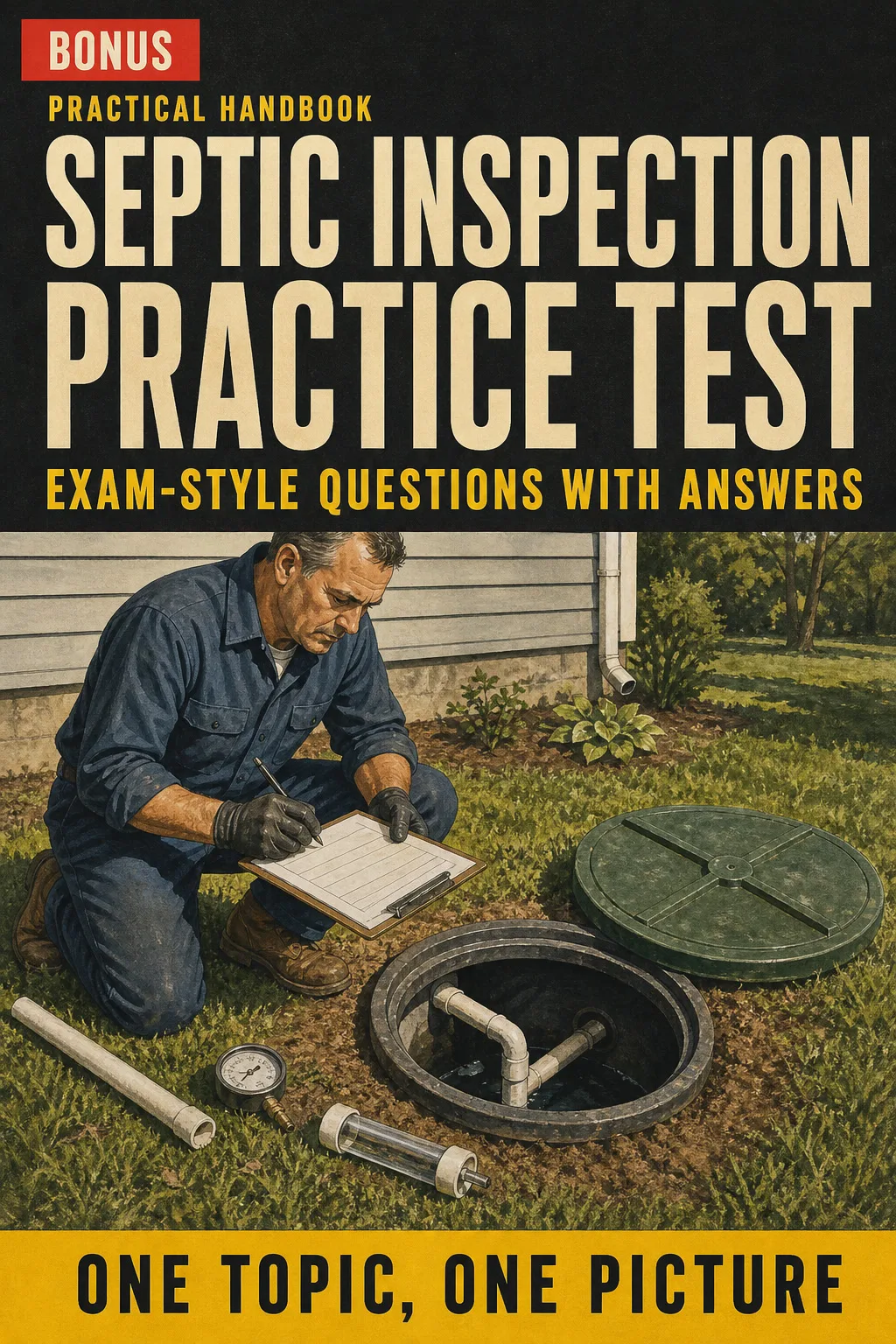
Septic Inspection Practice Test: Exam-Style Questions with Answers

BONUS 1: «Septic Inspection Practice Test: Exam-Style Questions with Answers»

Value on its own: US$ 17.90

Test yourself on tanks, baffles, pump controls, drainfields and reports, and see why each answer is right before exam day.

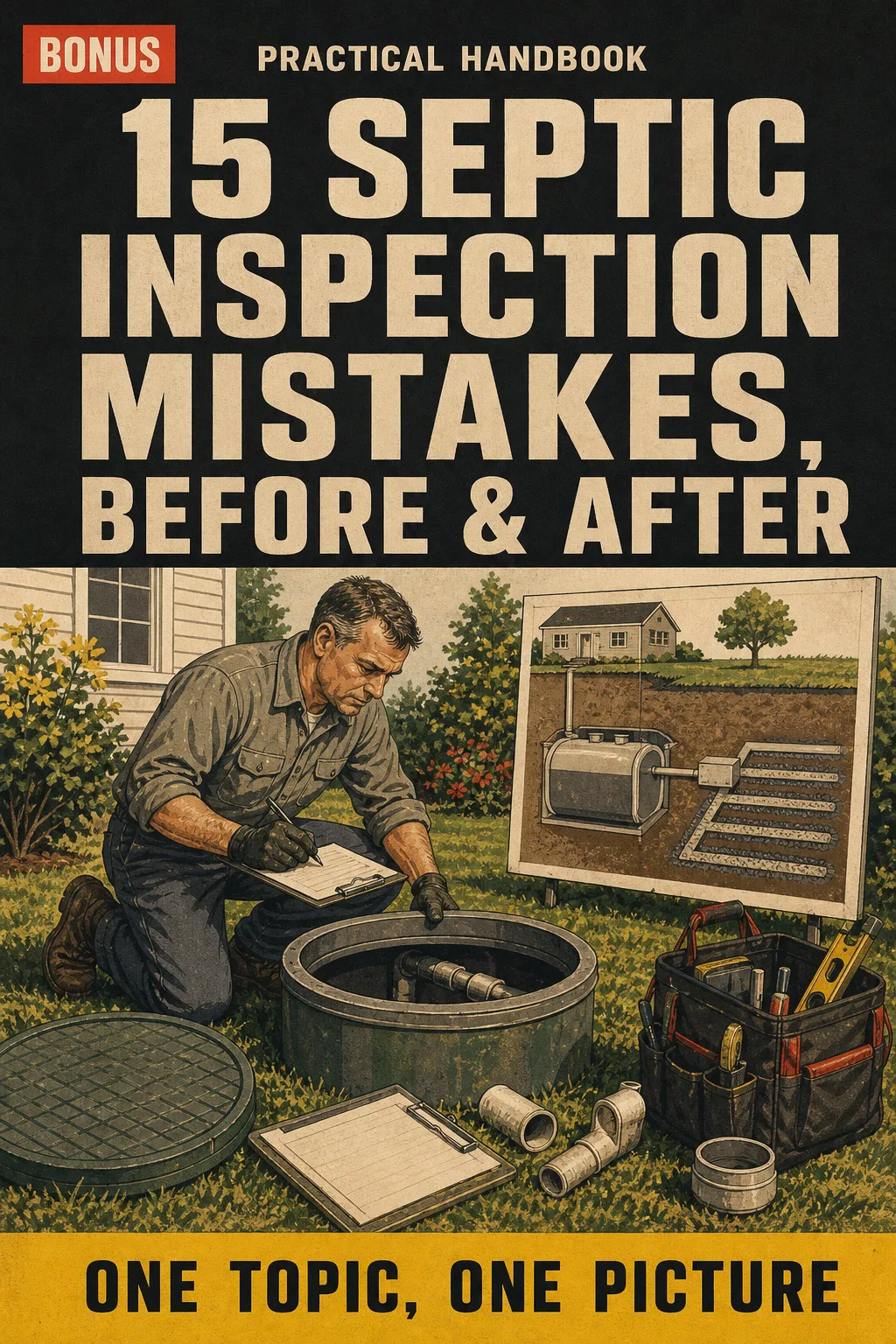
15 Septic Inspection Mistakes, Before & After

BONUS 2: «15 Septic Inspection Mistakes, Before & After»

Value on its own: US$ 14.90

See the most common field and report mistakes drawn next to the right way, so you avoid them on your next inspection.

Septic Inspection Illustrated with 2 Free Books

  • Septic Inspection Illustrated: 64 illustrated pagesUS$ 63
  • BONUS 1: Septic Inspection Practice Test: Exam-Style Questions with AnswersUS$ 17.90
  • BONUS 2: 15 Septic Inspection Mistakes, Before & AfterUS$ 14.90
  • High-resolution PDF to printIncluded
Total value US$ 95.80
YOUR PRICE:
US$ 27
You save US$ 68.80
YES, I WANT SEPTIC INSPECTION ILLUSTRATED FOR US$ 27

📄 This is a digital PDF book sent to your email: nothing is printed or shipped.

Secure purchaseEncrypted payment30-day guarantee

PDF by email: We email you Septic Inspection Illustrated as a PDF, together with the two free books. It's a single payment: no installments, no extra charges.

Who This Book Is For

You're adding septic to your home inspections

You're adding septic to your home inspections

The whole system drawn as one path, so you can stop referring it out and walk the property in the same order every time.

Your NAWT exam is coming up

Your NAWT exam is coming up

The inspection standards organized step by step, with the key numbers in a box and practice questions to check yourself before exam day.

You already pump and service tanks

You already pump and service tanks

What you see every day, put in inspection order: what to measure, what to test and how to write it so the report holds up.

Everything You Get Today

US$ 95.80US$ 27
YES, I WANT SEPTIC INSPECTION ILLUSTRATED FOR US$ 27

📄 This is a digital PDF book sent to your email: nothing is printed or shipped.

30DAYS
GUARANTEE

30-Day Guarantee

Try Septic Inspection Illustrated for 30 days, bonus books included.

We refund everything if the file won't open, if the book isn't what you see here, if you were charged twice or if the email doesn't arrive. Just email us.

You pay once. No subscriptions.

Frequently Asked Questions

Is it for me if I've been in the trade for years?

Yes, if you want it all in one order. It doesn't teach plumbing basics: it goes straight to the inspection, what to measure, what to test and how to word it in the report. If you already pump tanks or inspect homes, it puts what you know in inspection order and gives you the key numbers to review before the exam.

Where does the content come from?

From the current NAWT inspection standards and training material, the U.S. EPA Onsite Wastewater Treatment Systems Manual and EPA SepticSmart guidance. The method is the same everywhere; what changes by place (setbacks, pump intervals, title-transfer forms) is flagged on the page so you confirm it with your state and county rules. The review section ends with a state and county checklist to fill in with yours.

Is it official material?

No. It's an independent illustrated study book. It is not published or endorsed by NAWT, the EPA or any county, and it does not give you a certificate, continuing-education hours, NAWT certification or county registration. You still take the official course and exam; this helps you study and review for them.

Does it replace the course or training?

No. It does not replace NAWT training, state or county licensing, OSHA confined-space training or your local onsite rules. It helps you study and review them.

Are the practice questions the ones on the exam?

No. They are written for this book, in exam style, to help you check what you know. They are not official exam questions.

When and how do I get it?

As a PDF by email, sent to the address you enter at checkout. The two bonus books come the same way.

Do I have to pay every month?

No. It's a one-time payment.

Can I have it on paper?

Yes. The PDF is printable, so you can print it at home or at a print shop and keep it in the truck.

How does the refund work?

You have 30 days. We refund everything if the file won't open, if the book isn't what you see on this page, if you were charged twice or if the email doesn't arrive: just email us.

Before You Close This Page

No more rereading the standards with nothing sticking.

Sludge, scum and floats: you see them drawn, and that's it.

You get to the exam and the job knowing where everything is.

Drawings make studying faster.

The book is right below.

One-time payment: US$ 27 · Guarantee: 30 days · PDF by email

YES, I WANT SEPTIC INSPECTION ILLUSTRATED FOR US$ 27

📄 This is a digital PDF book sent to your email: nothing is printed or shipped.